Your Air Filter Might Be Raising Your Bill — Here's the 2-Minute Fix
Changing your HVAC filter is the cheapest, easiest energy fix there is — and one of the most overlooked. Here's how often to do it, which filter to actually buy, and the mistake that quietly costs you money.
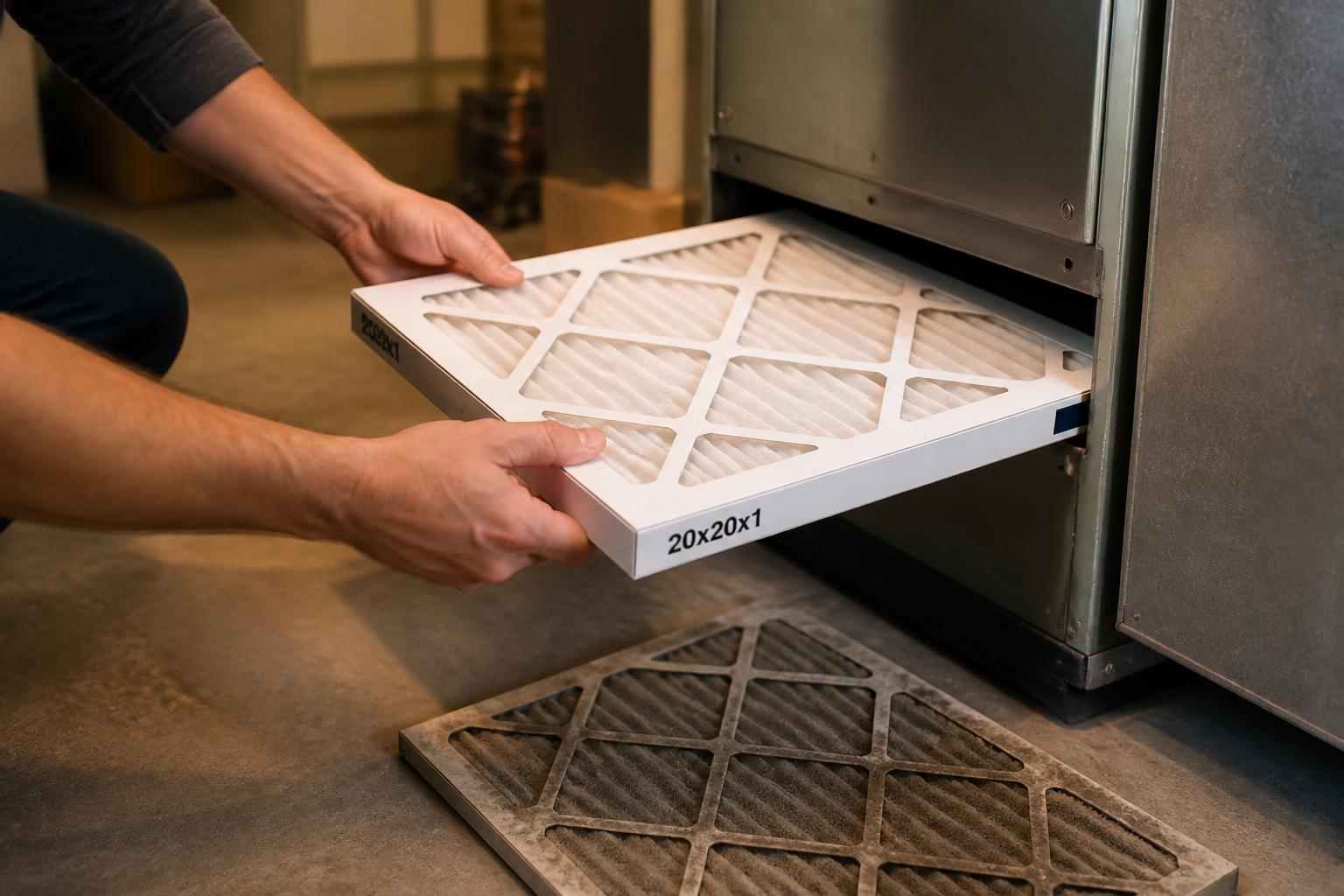
Your energy bill keeps inching up, the house feels a little stuffier than it should, and nothing''s really changed? You''re not alone — and the culprit might be hiding behind a vent. A clogged air filter doesn''t announce itself. There''s no draft to feel, no cold spot to find. It just sits in the wall slowly choking your system while the bill creeps up.
The good news? It''s the cheapest, easiest fix in this whole blog — about the price of a pizza, and two minutes of your time.
One of the Cheapest Fixes We See — and One of the Most Forgotten
Here''s how common this is. Across 1,082 real HomeBoost audits, replacing or upgrading the HVAC filter was recommended in 455 homes — over 4 in 10 — making it one of the most frequent findings in the whole dataset. And the economics are hard to argue with: an average cost of $41.33, average annual savings of $84.89, and a savings-to-investment ratio (SIR) of 4.05.
In plain terms — SIR is just how many dollars you get back for each dollar you spend, and an SIR above 1.0 means a fix pays for itself. At 4.05, a fresh filter returns about $4 for every $1 it costs. Put a clock on it: at roughly $41 against $85 in yearly savings, the average filter pays for itself in about six months. After that, it''s money back in your pocket.
The catch — and it''s a fair one — is that this isn''t a one-and-done fix. A filter is maintenance, not a permanent upgrade. The savings come from keeping a clean one in place all year, not from changing it once and forgetting it again.
Why a Dirty Filter Costs You Money
It helps to know what''s actually happening behind that vent.
Your heating and cooling system pulls air through the filter on its way to being warmed or cooled. When the filter is clean, air flows freely. When it''s packed with dust, the system has to work harder to pull air through — running longer to hit the same temperature, and burning more energy doing it. A neglected filter can also let dust build up on the equipment itself, which drags efficiency down further over time.
So the cost isn''t dramatic or scary — it''s quiet and constant. A little extra runtime, every cycle, all season. That''s exactly the kind of slow leak that shows up on the bill without any single moment you''d notice. (If your bill''s been climbing for reasons you can''t pin down, our guide on why your energy bill is so high covers the usual suspects.)
How Often Should You Change It?
The rule of thumb is every three months for a standard one-inch filter — but the honest answer is "it depends on your home." A few things speed up the clock:
- Pets: fur and dander clog filters faster — closer to every one to two months.
- Allergies or asthma in the house: change more often to keep air quality up.
- Running the system hard: peak summer and winter mean more air moving through, and a filter that loads up quicker.
- Thicker media filters (4–5 inches): these last longer — often six to twelve months — because they have far more surface area.
The simplest habit: check it monthly. Hold it up to a light. If you can''t see through it, or it looks gray and matted, swap it. You''ll quickly learn your home''s rhythm.
Which Filter Should You Buy?
This is where it''s easy to overthink it — or to overspend. Filters are rated by MERV (Minimum Efficiency Reporting Value), a scale of roughly 1 to 16 for home filters. Higher means finer filtration: a higher-MERV filter catches smaller particles.
Here''s the part the packaging won''t tell you: higher isn''t automatically better. A filter that''s too dense for your system restricts airflow — which makes your blower strain, the exact problem you were trying to avoid. The goal is to match the filter to what your system is built to handle.
| MERV rating | Catches | Best for |
|---|---|---|
| 1–4 | Large dust and lint | Bare minimum — protects equipment, not air quality |
| 5–8 | Dust, pollen, mold spores | Most homes — a solid balance of filtration and airflow |
| 9–12 | Finer dust, pet dander | Homes with pets or mild allergies |
| 13+ | Fine particles, smoke | Allergy or asthma needs — only if your system is rated for it |
Two quick rules of thumb: for most homes, a pleated filter in the MERV 8–11 range is the sweet spot. And before you jump to a high-MERV filter, check your system''s documentation (or the existing filter) for the highest rating it''s designed to take — going past that costs you airflow, not dust.
One more choice you''ll see: washable (reusable) versus disposable. Reusable filters cost more up front and save waste, but they''re usually lower-MERV and have to be fully dry before they go back in — a damp filter is an invitation for mold. For most people, an inexpensive pleated disposable, changed on schedule, is the easy, dependable pick.
It''s Easy — Here''s the Whole Job
If you''ve been putting this off because it sounds like a chore, it isn''t. Start to finish, it''s about two minutes:
- Find the size. It''s printed right on the edge of your old filter — something like 16x25x1. Buy that size.
- Turn the system off at the thermostat so it isn''t pulling air mid-swap.
- Note the airflow arrow. Every filter has an arrow on the frame; it points toward the furnace or blower (the direction air flows). Match it.
- Slide the old one out, the new one in, arrow pointed the right way.
- Turn the system back on. Done.
No tools, no wiring, no mess. If you can slide a tray into an oven, you can do this.
When a Filter Won''t Fix It
Honesty time: sometimes a fresh filter isn''t the whole answer, and it''s worth knowing the signs.
If you''ve put in a clean filter and some rooms still run hot or cold, or the system seems to kick on and off constantly, or your brand-new filter turns filthy in a couple of weeks — those point to something a filter can''t solve. Leaky or undersized ducts, an aging system, or a bigger airflow problem can all masquerade as "the filter." That''s the moment to look deeper rather than just buying more filters. Our piece on what an audit actually finds — and the smartest order to fix it walks through how the HVAC and duct pieces fit together.
The filter is also a useful tell. It''s the cheapest thing to rule out first — and when ruling it out doesn''t solve the problem, you''ve learned something worth knowing.
Frequently Asked Questions
How often should I really change my air filter? Every three months for a standard one-inch filter is the default. Homes with pets or allergies should aim for every one to two months; thicker four-to-five-inch media filters can go six to twelve. The reliable habit is to check it monthly and change it when you can''t see light through it.
What MERV rating should I use? For most homes, a pleated filter in the MERV 8–11 range balances good filtration with healthy airflow. Go higher (13+) only if you have allergy or asthma needs and your system is rated to handle it — a filter that''s too dense restricts airflow and strains the blower.
Will a better filter actually lower my energy bill? A clean filter will — because it lets your system breathe instead of forcing it to work harder. The savings come from staying on a schedule, though. If you already change yours on time, you''ve captured this win; the upside is biggest for homes coming off a long-neglected filter.
Washable or disposable — which is better? Disposable pleated filters are cheap, effective, and foolproof, which is why they''re the right call for most people. Washable filters cut down on waste and last years, but they''re typically lower-MERV and must be completely dry before reinstalling. Pick based on whether you''d rather save money over time or keep it simple.
My filter gets dirty really fast — is something wrong? Possibly. A filter that clogs in a week or two can signal excess dust from leaky ducts, a system running more than it should, or construction debris in the air. If it keeps happening, it''s worth looking at the system as a whole rather than just buying filters more often.
The Bottom Line
A clean air filter is about as close to free money as home energy gets: roughly $40, two minutes, and one of the fastest paybacks we measure. The only trick is remembering to do it — so set a phone reminder for every three months and let it run on autopilot.
And treat it as step one, not the finish line. If a fresh filter doesn''t fix an uneven, expensive, or hard-working system, that''s your home telling you the real issue is somewhere else — and worth finding before you spend another dollar.
See What Else Your System Is Hiding
A filter is the easiest thing to rule out. Finding the rest — the duct losses, the air leaks, the insulation gaps quietly driving your bill — is what the $99 HomeBoost DIY assessment is built for. It ranks every fix in your home by payback in about 30 minutes, so you know exactly what to tackle next, for a fraction of the $437 average cost of a professional audit. And our rebate matching connects the bigger-ticket fixes to the programs you qualify for.
Sources & references: HomeBoost audit dataset (1,082 homes — HVAC filter cost, savings, and SIR); general HVAC filter and MERV guidance. Numbers are illustrative; your actual figures depend on your system, climate, and how neglected the filter was to begin with.