Smart Thermostats: What to Know Before You Buy
A smart thermostat is one of the highest-payback upgrades a home energy audit turns up — but only if it fits your home and your habits. Here's how to tell, what it really costs, and how to put one in without calling a pro.
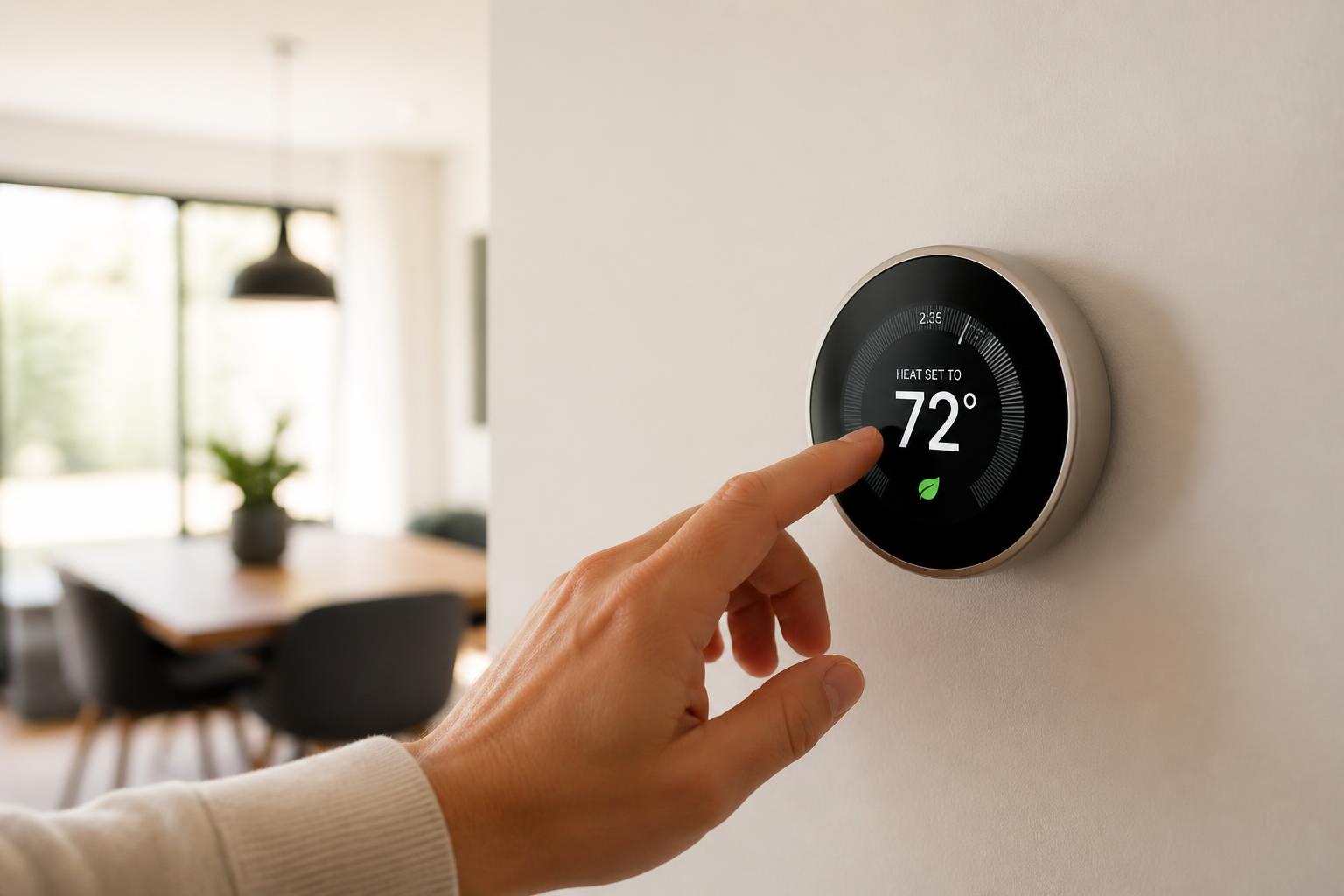
A smart thermostat is one of those upgrades that sounds obviously worth it — until you're standing in the hardware aisle weighing a $250 learning model against the $80 one, wondering if either will actually move your bill. This guide cuts through it: what a smart thermostat really does, when it's worth the money (and when it isn't), how hard it is to install, and how to get a rebate to cover part of the cost.
One of the Best Paybacks in the House — With a Catch
You've probably heard a smart thermostat will lower your bill. You've also seen the $250 price tags and the wiring horror stories — and you're not sure it's worth the hassle for your home.
The good news? It usually is. Across 1,082 real HomeBoost audits, a smart thermostat was recommended in 420 homes — nearly 4 in 10 — and it was one of the strongest performers we measured: an average cost of $105.28, average annual savings of $148.40, and a savings-to-investment ratio (SIR) of 8.87. In plain terms — that's about $9 back for every $1 you spend over the life of the fix. (More on SIR in a moment.)
The short version: a smart thermostat is cheap, high-payback, and often DIY-friendly — but it's a tactical fix, not a magic one. It runs your heating and cooling on a smarter schedule; it can't seal a leaky house. Get the order right and it compounds your other savings. Get it wrong and you're just running a drafty home a little more cleverly.
What a Smart Thermostat Actually Does
Strip away the marketing and a smart thermostat does one core thing: it stops you from heating and cooling an empty house.
A standard manual thermostat holds whatever temperature you last set, around the clock. A programmable thermostat lets you set a schedule — cooler at night, eased back while you're at work. A smart thermostat does that automatically and then adds a few conveniences on top:
- Learning and scheduling: it picks up your routine over a week or two and builds the schedule for you.
- Geofencing: it uses your phone's location to ease off when the house is empty and warm things back up before you're home.
- Remote control: adjust the temperature from your phone — handy when plans change.
- Usage reports: most apps show you when and how much your system runs.
All of that adds up to the headline number: a programmable or smart thermostat can save roughly 10–15% on heating and cooling costs by not conditioning space nobody's using. The savings come from the schedule, not the screen.
Is It Worth It? Run It Through the Same Test as Any Fix
The honest way to judge any upgrade isn't the sticker price — it's the payback. That's what SIR measures: a fix's lifetime savings divided by what it costs to install. An SIR above 1.0 means the fix pays for itself. A smart thermostat's average of 8.87 clears that bar many times over. By that math, it's not an expense — it's one of the better small investments your home can make.
Put a clock on it: at roughly $105 to install against $148 in savings a year, the average smart thermostat pays for itself in under a year — about eight months. Everything after that is money back in your pocket.
But here's the catch we'd be doing you a disservice to skip: a thermostat optimizes a schedule, it doesn't fix an envelope. If your home is drafty or under-insulated, a smart thermostat will faithfully run a leaky system on a smarter timer — and you'll leave most of the savings on the table.
That's why we always come back to the same sequence: air seal, then insulate, then ducts, then equipment. A smart thermostat is a smaller tactical fix that can slot in anytime, but it earns the most once the leaks underneath it are closed. If your bill has been creeping up, our guide on why your energy bill is so high is a good place to find what to seal first, and what an audit actually finds — and the smartest order to fix it explains the order in depth.
When a smart thermostat is a clear win:
- You're still on a manual thermostat — or you have a programmable one you never actually programmed.
- Your schedule is predictable: out during the day, asleep at night.
- You travel or leave the house empty for stretches.
- You have multiple zones or a big temperature swing between rooms you're already managing by hand.
When it'll move the needle less:
- You already run a disciplined setback schedule and stick to it — you've captured most of the easy savings already.
- Someone's home nearly all day, every day, so there's little "empty house" time to optimize.
- Your heating and cooling bill is already small relative to the rest of your energy use.
None of those are reasons it's a bad idea — just reasons the payback may be slower. The point of an honest guide is to tell you when not to expect miracles.
How Hard Is It to Install?
Easier than most people fear, with one thing to check first.
Most swaps take 30 to 60 minutes. You're working with low-voltage wiring — the thin, harmless wires behind the faceplate, not the high-voltage kind in your outlets — so the risk is low and the tools are minimal. You label the existing wires, snap on the new base, reconnect, and follow the app.
The one thing to check before you buy: the C-wire. That's the "common wire," a fifth wire that gives a smart thermostat steady power so it can run its display and Wi-Fi. Plenty of homes have one; plenty of older homes don't. Most smart thermostats list whether they need a C-wire, and many ship with a small adapter if you're missing one. If you have a C-wire (or use the adapter), this is a confident DIY job. If you don't, and the wiring gets fussy, that's the moment a pro is worth it.
Here's how the two paths compare:
| Option | Difficulty | Cost | Time |
|---|---|---|---|
| DIY install | Moderate | $50–$250 (unit only, no labor) | 30–60 min |
| Hire a pro | — | $200–$500 installed (avg $350) | One appointment |
The rule of thumb: if you're comfortable labeling a few wires and following step-by-step photos, do it yourself. If your system lacks a C-wire and you're not keen on troubleshooting, hand it off — at an average of $350 installed, it's still a fix that pays for itself.
Don't Overpay for Features You Won't Use
This is where it's easy to spend more than you need to. The flagship learning models with sensors in every room are genuinely nice — but they're not the only path to that 10–15%.
Two quick rules of thumb:
- Most of the savings come from the schedule, not the bells and whistles. A solid $80–$120 smart thermostat captures the core payback. The premium features are convenience, not a different category of savings.
- Match the model to your home. Buy room sensors if you have rooms that run hot or cold and you'll actually use them. Buy geofencing if your schedule is unpredictable. Skip what doesn't fit how you live.
The most expensive thermostat isn't automatically the best one — same lesson the audit data keeps teaching about where the savings really are: the cheapest fixes tend to win.
Rebates Can Cover a Big Slice of It
A smart thermostat is one of the most commonly subsidized upgrades out there. Many state and utility programs offer $50–$100 rebates on a qualifying smart thermostat — and on a unit that averages around $105, that can knock the out-of-pocket cost down to almost nothing.
A rebate doesn't just save you money up front — it effectively raises an already-strong payback by lowering what you spend to get it. (One honest caveat: thermostats generally fall under state and utility programs rather than the federal energy-credit categories, so check what's available where you live.) Our home energy rebates in 2026 overview lays out what's out there, and HomeBoost's rebate matching connects you to the specific programs you qualify for based on your zip code and utility — no research required.
Frequently Asked Questions
Will a smart thermostat really lower my bill?
Usually, yes — by roughly 10–15% on heating and cooling, because it stops you from conditioning an empty house. How much you actually save depends on your habits: the bigger the gap between a smart schedule and what you're doing now, the more you'll see. If you already run a tight manual schedule, the gains are smaller.
What's the difference between programmable and smart?
A programmable thermostat follows a schedule you set by hand. A smart one builds and adjusts that schedule automatically — learning your routine, using your phone's location, and letting you control it remotely. Both save by avoiding waste; the smart one just takes the effort off your plate.
What's a C-wire, and how do I know if I have one?
The C-wire ("common wire") supplies steady power to a smart thermostat. Pop off your current thermostat's faceplate and look for a wire connected to a terminal labeled "C." If it's there, installation is straightforward. If not, many smart thermostats include an adapter — or it's a reasonable job for a pro.
Can I install it myself?
For most homes, yes. It's low-voltage wiring, the app walks you through it, and it takes 30–60 minutes. The main thing that turns it from easy to tricky is a missing C-wire. If wiring isn't your thing, a pro runs about $200–$500 installed.
Is it worth it if someone's home all day?
The payback is slower, because there's less empty-house time to optimize. It can still help with overnight setbacks and convenience — just set your expectations toward the modest end of the savings range.
Are there rebates?
Often. Many utilities and states offer $50–$100 toward a qualifying smart thermostat. Check your utility's website, or let HomeBoost's rebate matching surface what you qualify for.
The Bottom Line
A smart thermostat is a rare combination: cheap, easy enough for most people to install, and one of the highest-payback fixes we see in real audit data. For most homes, it's a clear yes.
Just remember what it is and isn't. It's a smart way to run your system — not a substitute for sealing the leaks and insulating the envelope that decide how hard that system has to work in the first place. Seal first, let the thermostat compound the savings, and let a rebate cover part of the cost.
Find Out If It Belongs at the Top of Your List
Before you buy, it's worth knowing whether a thermostat is actually your highest-payback next move — and what to seal first so it pays off. A $99 HomeBoost DIY assessment ranks every fix in your home by payback in about 30 minutes, so you're not guessing — for a fraction of the $437 average cost of a professional audit. And once you know what to do, our rebate matching finds the $50–$100 thermostat rebate (and every other program) you qualify for.
Sources & cost references: HomeBoost audit dataset (1,082 homes — cost, savings, and SIR); HomeAdvisor and Angi (smart thermostat unit and installation costs); state and utility rebate program listings. Numbers are illustrative; your actual figures depend on climate, energy rates, your schedule, and the condition of your home.